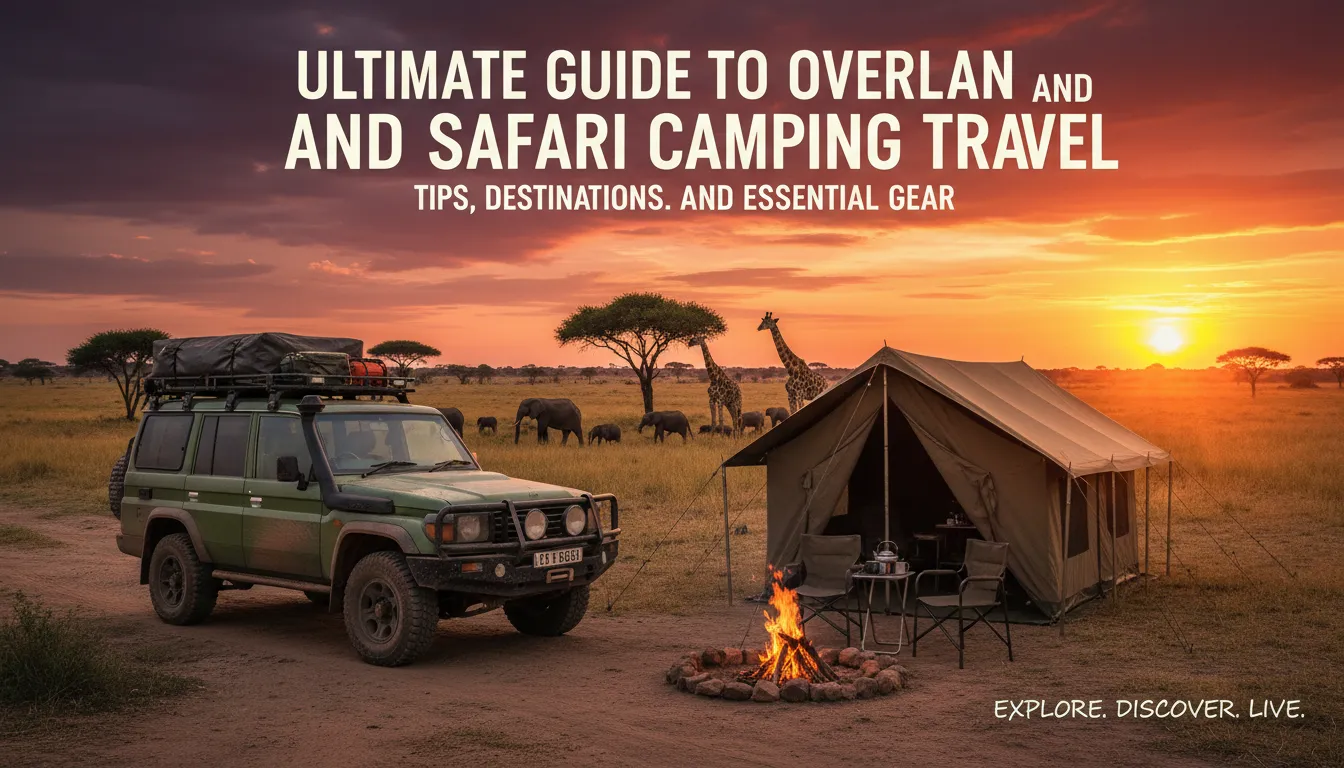
This comprehensive guide explores the intersection of overland and safari camping and travel, covering vehicle preparation, essential gear, and survival tips. We dive into the best practices for self-reliant exploration, ensuring you are equipped to navigate rugged landscapes while respecting wildlife and local ecosystems during your journey.
Embark on the ultimate journey where the pavement ends and adventure begins. Discover how to master overland and safari camping and travel for unforgettable off-road exploration and remote wilderness experiences.
The call of the wild is a powerful siren song for the modern adventurer. Moving beyond the confines of traditional tourism, overland and safari camping travel represent the pinnacle of self-reliant exploration. It is a journey where the destination is often secondary to the experience of navigating the earth’s most rugged and beautiful landscapes. Whether you are traversing the red deserts of the Namib or the vast wilderness of the Australian Outback, understanding the mechanics of this travel style is crucial for safety and enjoyment.
Defining Overland and Safari Camping and Travel
At its core, overland and safari camping travel are about self-sufficiency. Unlike a standard road trip, overlanding involves traveling to remote locations where the journey itself is the goal. Safari camping specifically emphasizes the observation of wildlife in their natural habitats, often requiring specialized knowledge of animal behavior and environmental conservation.
To succeed in overland and safari camping travel, one must blend the skills of a mechanic, a navigator, and a woodsman. The reliance on a capable 4×4 vehicle is a prerequisite, as the terrain can shift from deep sand to river crossings in a matter of miles.
The Foundation: Vehicle Choice and Preparation
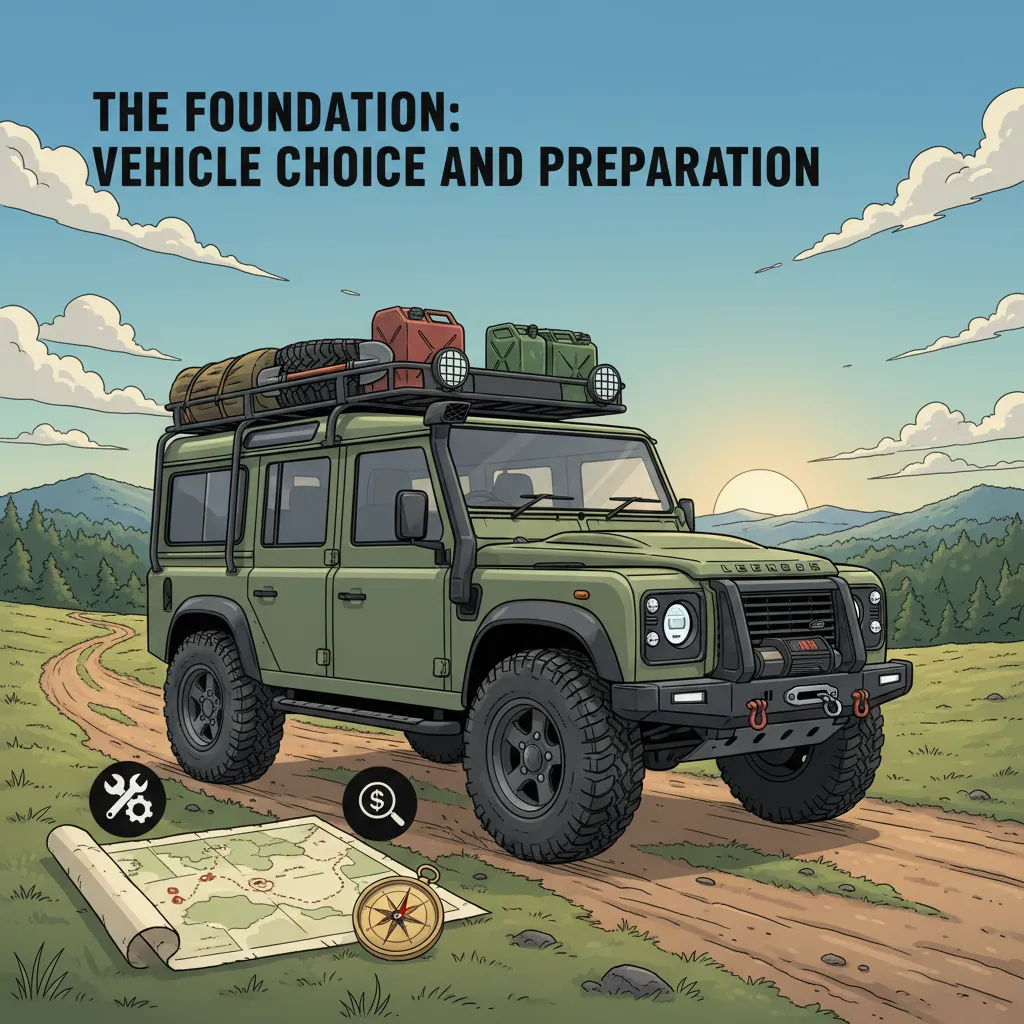
Your vehicle is your lifeline. In the world of overland and safari camping travel, reliability trumps luxury every time. Most enthusiasts opt for high-clearance 4WD vehicles known for their mechanical simplicity and global parts availability.
Essential Vehicle Modifications
- Upgraded Suspension: Standard factory suspension is rarely equipped to handle the constant weight of camping gear, water, and fuel.
- All-Terrain Tires: High-quality rubber is the only thing between your vehicle and the rocks.
- Snorkels: Vital for dusty environments and deep water crossings to protect the engine’s air intake.
- Dual Battery Systems: To run refrigerators and lights without draining the starter battery.
Essential Gear for Overland and Safari Camping and Travel
Equipping yourself for remote travel requires a balance between necessity and weight management. Every kilogram added to the vehicle affects fuel economy and off-road capability.
1. Navigation and Communication
In areas without cellular reception, traditional tools are non-negotiable. While digital tools like Google Analytics help track web data, in the bush, you need satellite-based tracking and physical maps.
- Satellite Messengers: Devices like Garmin InReach for emergency SOS and texting.
- GPS Units: Dedicated off-road GPS with topographic maps.
- Paper Maps: The ultimate backup for electronic failure.
2. Recovery Equipment
Sticking is a part of overland and safari camping travel. You must be able to recover yourself.
- Traction Boards: Essential for sand and mud.
- Kinetic Recovery Ropes: For vehicle-to-vehicle recovery.
- High-Lift Jacks: For changing tires on uneven ground or lifting the vehicle out of ruts.
3. The Camp Kitchen
Cooking in the wild is a highlight of safari life. A well-organized kitchen makes life easier.
- 12V Compressors Fridges: Ditch the ice for consistent cooling.
- Dual-Burner Stoves: Reliable propane or multi-fuel options.
- Water Filtration: Systems capable of removing bacteria and viruses from natural sources.
Overland vs. Safari Camping: A Comparison
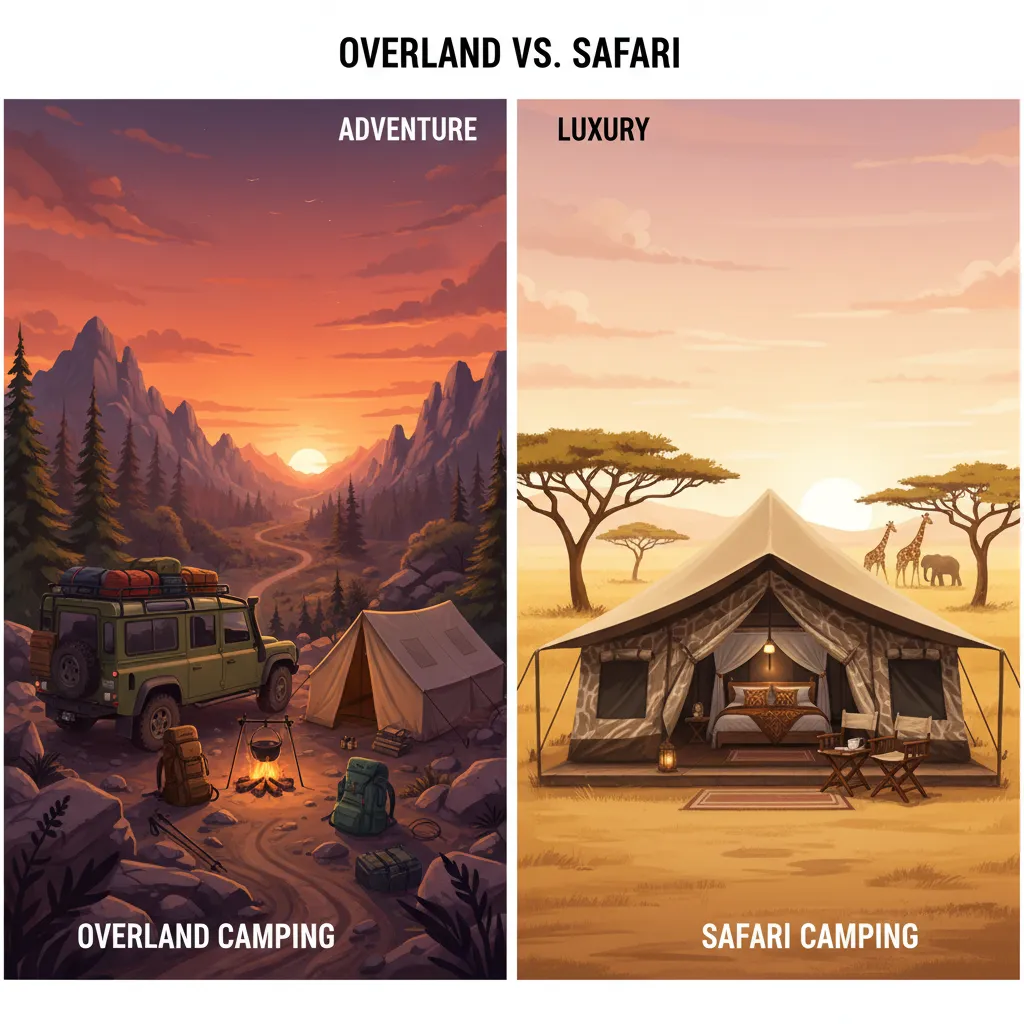
| Feature | Overland Travel | Safari Camping |
| Primary Goal | Trans-continental journey | Wildlife observation |
| Duration | Weeks to Months | Days to Weeks |
| Accommodation | Roof-top tents/Ground tents | Mobile camps/Luxury lodges |
| Terrain | Varied (Mountains, deserts, cities) | Specialized (Savannas, jungles) |
| Self-Reliance | Very High | High to Moderate |
The Overland Trailer Setup
For many, the vehicle alone doesn’t provide enough space. This is where an overland trailer setup becomes invaluable. A rugged off-road trailer allows you to leave your heavy gear at a basecamp while you explore technical trails in your vehicle.
When considering an overland trailer setup, look for:
- Independent Suspension: To handle high-speed washboard roads.
- Articulating Hitches: Allowing 360-degree rotation to prevent binding on steep inclines.
- Integrated Power: Solar panels and battery banks built into the trailer.
Innovative Storage: Overland Trailer Storage Solutions
Organization is the secret to a stress-free trip. Effective overland trailer storage solutions utilize every cubic inch of space.
- Modular Drawer Systems: For tools and recovery gear.
- Slide-Out Kitchens: Allowing you to cook without unpacking the whole trailer.
- MOLLE Panels: For securing axes, shovels, and first-aid kits to the exterior.
Enhancing the Experience: Overland Trailer Accessories
To refine your overland and safari camping travel experience, consider high-quality overland trailer accessories.
- 270-Degree Awnings: Providing a massive shaded living area.
- Propane Tank Mounts: Safely securing fuel for the kitchen and heaters.
- On-Board Air Compressors: Vital for re-inflating tires after “airing down” for sand.
Maintenance: Trailer Maintenance for Overland Travel
The harsh environments encountered in overland and safari camping travel demand a rigorous maintenance schedule. Trailer maintenance for overland travel involves:
- Checking Bearing Grease: Water and dust can quickly ruin wheel bearings.
- Torquing Bolts: Off-road vibrations can loosen even the tightest bolts.
- Inspecting the Chassis: Looking for stress fractures after traversing rough corrugations.
For a deeper dive into the history of remote exploration, Wikipedia offers extensive background on the pioneers of overlanding.
Top Destinations for Overland and Safari Camping Travel
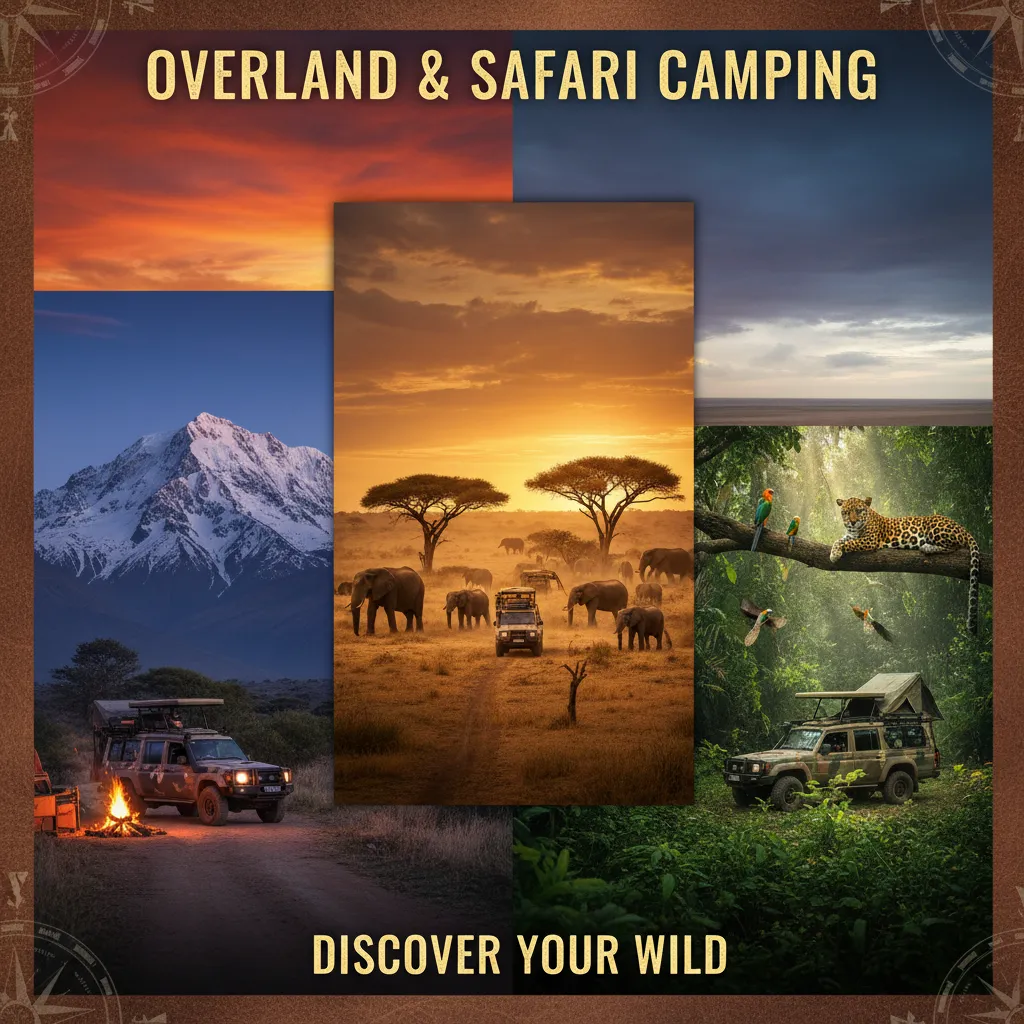
- The Serengeti, Tanzania: The quintessential safari experience with incredible biodiversity.
- The Canning Stock Route, Australia: One of the most remote and challenging overland tracks in the world.
- The Pan-American Highway: Stretching from Alaska to Argentina, offering every climate imaginable.
- The Garden Route, South Africa: Perfect for those blending overland and safari camping travel with coastal scenery.
SEO and Digital Strategies in the Travel Niche
In the digital age, sharing these adventures requires technical savvy. Leading creators use tools like SEMrush and Ahrefs to understand what fellow adventurers are searching for. By analyzing search intent, bloggers can provide better advice on “best overland and safari camping travel routes” or “how to build an overland trailer setup.” Furthermore, Backlinko provides excellent strategies for making this high-value information more discoverable to the global community.
Best Overland Trailers for Off-Roading
When selecting the best overland trailers for off-roading, durability and weight distribution are the primary factors. The best models feature a galvanized steel frame and aluminum body to prevent rust while keeping the center of gravity low. These trailers are specifically designed to follow the footprint of the tow vehicle, making them easier to manage on tight, winding tracks during overland and safari camping and travel.
Safety and Ethics in Remote Travel
Responsible overland and safari camping travel means leaving no trace. This involves:
- Wildlife Respect: Keeping a safe distance and never feeding animals.
- Waste Management: Packing out all trash and disposing of human waste properly.
- Fire Safety: Only using established fire pits and ensuring fires are completely extinguished.
Sustainable Power: The Shift to Smart Off-Grid Energy
The evolution of overland and safari camping travel has been significantly impacted by the transition from noisy generators to silent, high-efficiency energy systems. Modern travelers now rely on Lithium Iron Phosphate (LiFePO4) battery banks as the standard for energy storage. These batteries offer double the usable capacity of traditional lead-acid versions and can be charged rapidly via high-output solar arrays or the vehicle’s alternator while in transit.
To maximize efficiency, many are integrating Smart Energy Management Systems. These hubs connect to your smartphone or vehicle dashboard, providing real-time data on consumption patterns and remaining runtime. By scheduling energy-intensive tasks—such as running a portable water heater or induction cooktop—during peak solar hours, you can maintain a “net-zero” energy footprint. This silent power not only preserves the tranquility of the wilderness but also ensures you don’t disturb the very wildlife you’ve traveled to see during your overland and safari camping travel expedition.
Ethical Wildlife Engagement and Conservation Photography
As remote areas become more accessible, the responsibility to protect these ecosystems grows. Ethical overland and safari camping travel requires a “participation in conservation” mindset. This starts with photography etiquette: always use silent shutter modes on mirrorless cameras and avoid using flash, which can disorient nocturnal predators or spook grazing herds.
True conservation-led travel also involves supporting local communities. By choosing community-owned campsites and hiring local guides, you ensure that your travel spend directly incentivizes the protection of the surrounding habitat. Furthermore, modern travelers are encouraged to participate in “Citizen Science” projects, where sightings of endangered species are logged into global databases to help researchers track population health. This approach transforms your journey from a simple vacation into a meaningful contribution to the planet’s biodiversity.
Advanced Water Security: Beyond Simple Filtration

While basic filters were once the norm, the standard for overland and safari camping travel has moved toward comprehensive UV-LED sterilization and reverse osmosis systems. These advanced setups allow you to safely source water from stagnant or biologically active pools that traditional filters might miss.
A high-tier overland trailer setup often includes a dedicated water-making system that can desalinate brackish water or scrub heavy metals from well water. Coupled with smart flow-rate monitors, these systems allow for “low-flow” pressurized showers and ultra-efficient kitchen usage, effectively doubling the time you can stay off-grid. When you combine these technical safeguards with rigorous trailer maintenance for overland travel, you create a truly self-sufficient vessel capable of crossing the most inhospitable terrains on Earth.
Conclusion
Mastering overland and safari camping travel is a rewarding challenge that offers a unique perspective on our planet. By focusing on a reliable overland trailer setup, implementing smart overland trailer storage solutions, and committing to diligent trailer maintenance for overland travel, you can explore the unknown with confidence. The world is vast and waiting—equip yourself properly and start your journey today.
FAQs
What is the difference between overlanding and camping?
Overlanding is journey-focused travel to remote locations where the goal is self-reliant exploration. Camping is usually a stationary activity at a destination, often within reachable distances of civilization.
What vehicle is best for overland and safari camping and travel?
The most popular vehicles are 4WDs with a reputation for reliability, such as the Toyota Land Cruiser, Nissan Patrol, or Jeep Wrangler, due to their robust frames and off-road capability.
Do I really need an overland trailer?
It depends on your group size and the duration of travel. A trailer is excellent for long-term overland and safari camping travel, as it provides extra storage and allows you to set up a permanent basecamp.
What are the most important overland trailer accessories?
A 12V fridge, solar power setup, articulating hitch, and an awning are generally considered the most impactful accessories for comfort and functionality.
How do I find water in remote areas?
Overlanders carry large fresh-water tanks and use high-grade filtration systems (UV and ceramic) to safely drink from rivers, lakes, or community wells.
Is safari camping safe from wild animals?
Yes, if you follow established safety protocols. This includes staying inside your vehicle, never keeping food in your tent, and respecting the animal’s space and body language.
How do I manage power for my electronics?
Most overlanders use a “Dual Battery” system. The starter battery is used only for the engine, while a deep-cycle auxiliary battery (charged by solar or the alternator) powers fridges, lights, and chargers.
What should be in my off-road recovery kit?
A minimum kit should include traction boards, a kinetic recovery strap, a shovel, a tire pressure gauge, and a deflator.
Can I do overland and safari camping and travel solo?
While possible, it is safer to travel in a group of at least two vehicles. If traveling solo, a satellite communication device and a very high level of mechanical and survival skills are required.
How do I plan a route for overland travel?
Use specialized mapping apps, consult community forums like iOverlander, and always cross-reference with physical topographic maps to understand terrain challenges.