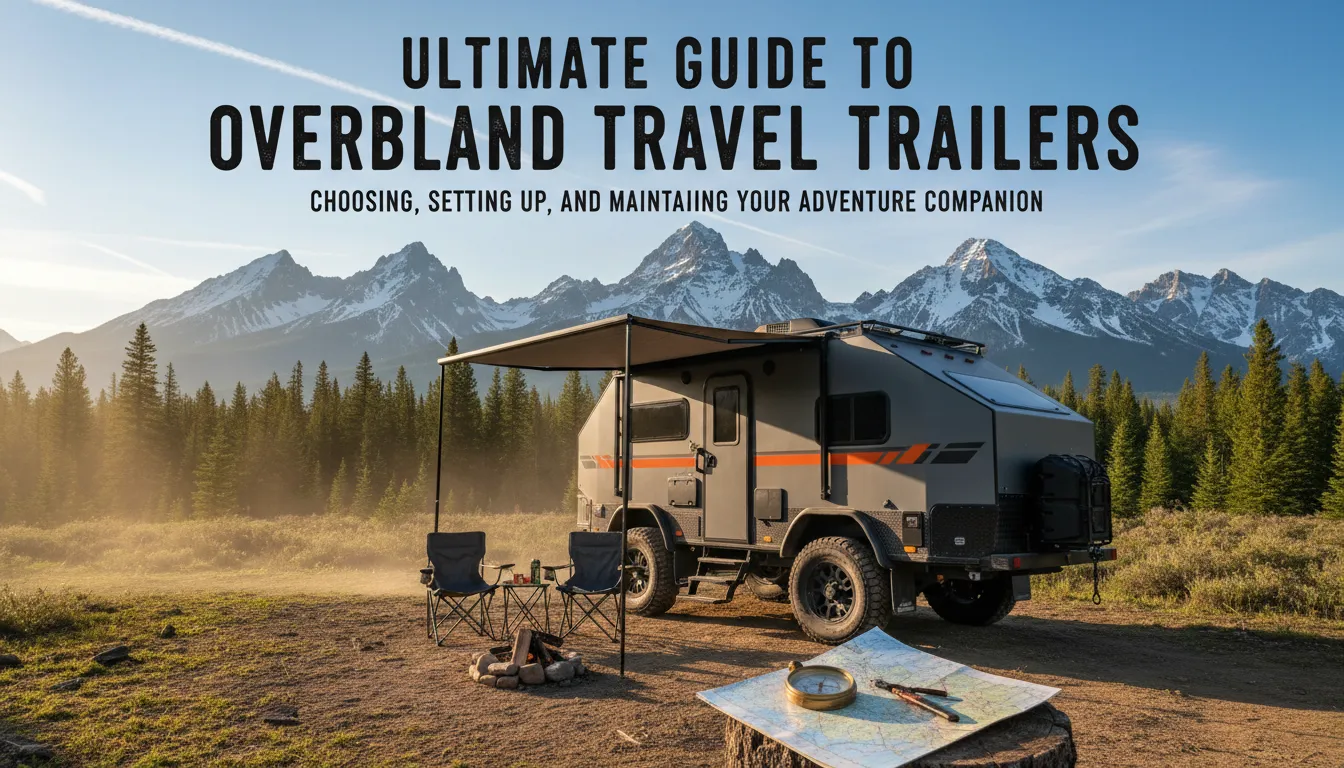
This guide explores the world of overland travel trailers, covering selection criteria, off-road capabilities, and essential overland trailer setup strategies. From optimizing overland trailer storage solutions to routine trailer maintenance for overland travel, we provide actionable insights for your ultimate off-grid journey.
Escape the paved roads and embrace the wild. Overland travel trailers offer the perfect balance of rugged durability and home-like comfort, allowing explorers to reach remote destinations without sacrifice.
The noise of crowded campgrounds and paved tourist traps often muffles the call of the wild. For those who seek true solitude, overlanding is the answer. However, traditional campers often fail when the pavement ends. This is where overland travel trailers become indispensable. Unlike standard RVs, these trailers are engineered to handle extreme articulations, water crossings, and corrugated washboard roads while providing a self-sustained sanctuary in the backcountry.
Understanding the Appeal of Overland Travel Trailers
Overlanding is defined by the journey as much as the destination. It is a form of self-reliant travel to remote locations where the goal is exploration and landscape appreciation. Using overland travel trailers enhances this experience by allowing you to set up a “basecamp.” This means you can unhitch your trailer, leave your heavy gear behind, and use your primary vehicle to explore technical trails or nearby landmarks with significantly less weight and better maneuverability.
When searching for the best overland trailers for off-roading, enthusiasts typically look for specific mechanical traits: independent suspension, high ground clearance, and a reinforced chassis. These trailers act as a mobile toolbox and kitchen, ensuring that even in the most desolate environments, you have access to clean water, power, and a comfortable bed.
How to Choose the Right Overland Travel Trailer
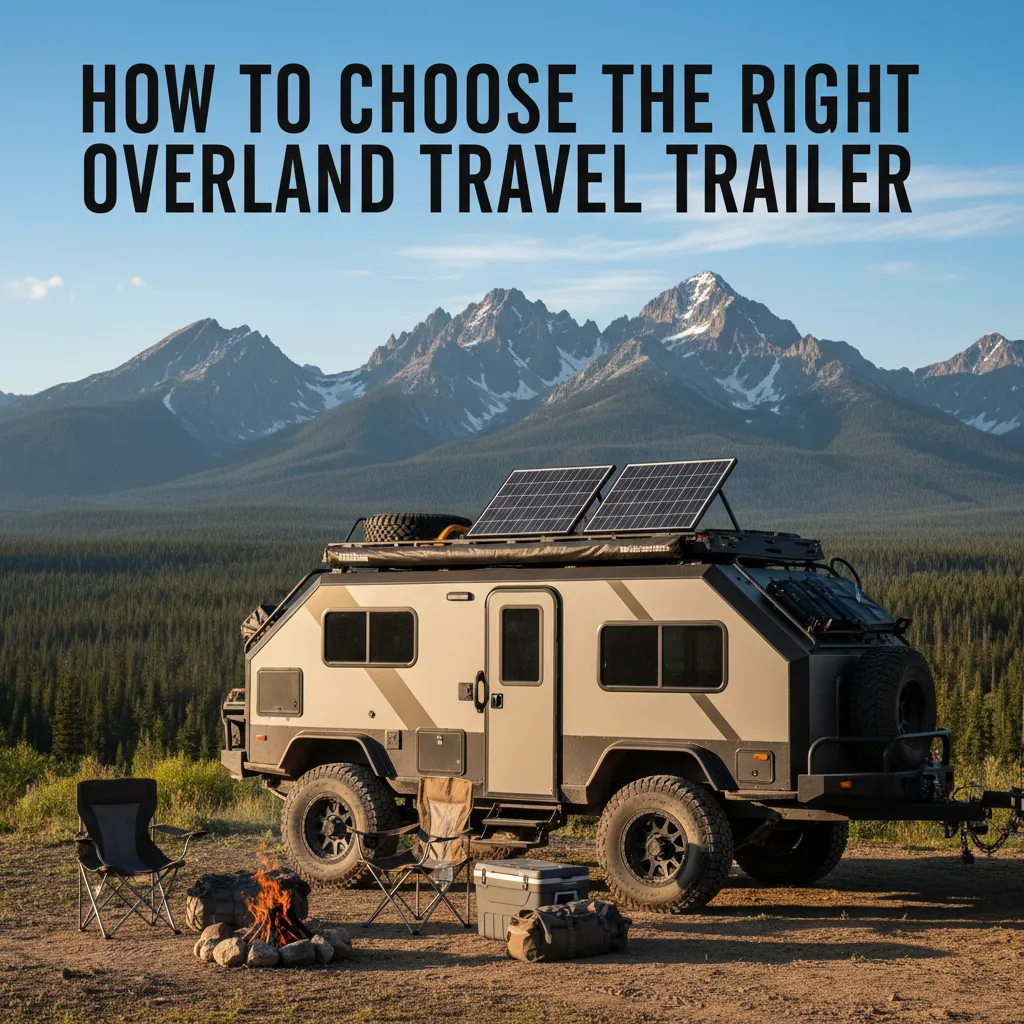
Choosing between various overland travel trailers requires a deep understanding of your towing vehicle’s capabilities and your personal camping style.
1. Weight and Towing Capacity
Before falling in love with a specific model, consult your vehicle’s manual. Remember that the “Dry Weight” listed by manufacturers does not include water, fuel, or gear. For off-road travel, it is best practice to stay well under your vehicle’s maximum towing capacity to avoid straining the transmission on steep, unpaved inclines.
2. Suspension Systems
The backbone of any off-road trailer is its suspension. Standard leaf springs often bounce excessively on rough terrain, which can damage internal components. Look for independent trailing arm suspension systems with heavy-duty shocks. This allows each wheel to move independently, soaking up bumps and keeping the trailer stable.
3. Articulating Couplers
A standard ball hitch is dangerous on off-road trails because it lacks the necessary range of motion. If the trailer tilts at an extreme angle while the vehicle remains flat, the hitch can bind or snap. The best overland trailers for off-roading utilize 360-degree articulating couplers (like the Max-Coupler or Articulating Poly-Block) that allow the trailer to twist and turn freely.
Overland Trailer Types
| Trailer Category | Best For | Key Features | Weight Range |
| Teardrop | Speed & Aerodynamics | Compact, Hard-shell, Rear Kitchen | 800 – 2,000 lbs |
| Expedition Box | Technical Trails | High Clearance, Utility Focus | 1,500 – 3,500 lbs |
| Pop-Up / Hybrid | Families | Expandable Living Space, Lightweight | 2,000 – 4,500 lbs |
| Full-Size Off-Road | Long-Term Living | Interior Bath/Shower, Heavy Duty | 4,500+ lbs |
The Essential Overland Trailer Setup
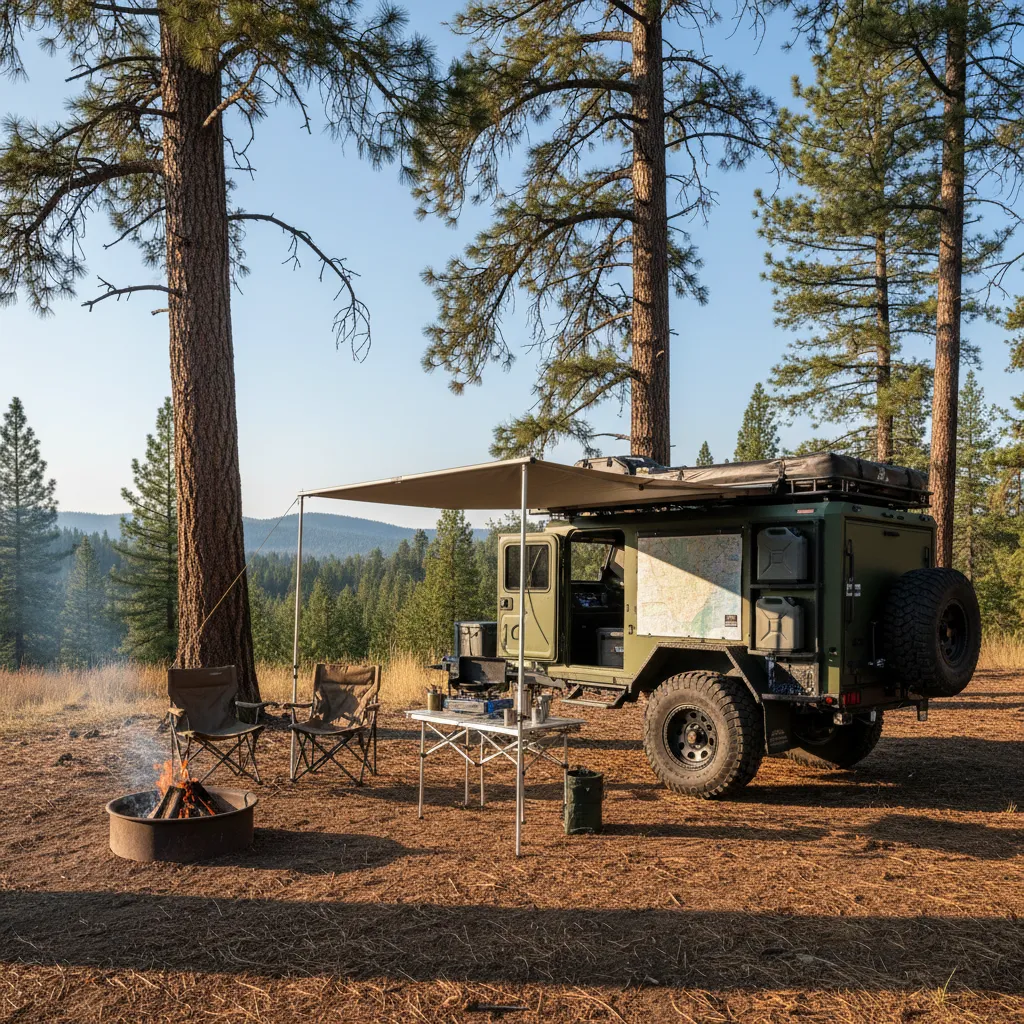
Once you have selected your trailer, the next phase is the overland trailer setup. A well-organized trailer is the difference between a relaxing trip and a logistical nightmare.
Power Management
Off-grid living requires a robust electrical system. Most modern overland travel trailers utilize Lithium Iron Phosphate (LiFePO4) batteries due to their weight efficiency and long life cycles. Integrating solar panels—either roof-mounted or portable “blanket” styles—ensures your fridge and lights stay powered indefinitely. Tools like Google Analytics for data tracking are popular in tech, but in the overlanding world, a high-quality battery monitor serves a similar purpose, providing real-time data on your power consumption.
Water Filtration and Storage
Water is your most precious resource. Your setup should include a large fresh-water tank protected by a skid plate. Beyond storage, incorporate a high-quality filtration system (like UV sterilization or ceramic filters) so you can safely replenish your tanks from natural sources like streams or lakes.
Shelter and Awnings
The area surrounding your trailer is your living room. Adding 270-degree awnings provides shade and rain protection for your outdoor kitchen. If your trailer is a compact “square-drop” or utility style, a Rooftop Tent (RTT) mounted on the trailer rack can provide additional sleeping quarters for guests or family members.
Overland Trailer Storage Solutions
Space is at a premium in any mobile dwelling. Effective overland trailer storage solutions focus on weight distribution and accessibility.
- Modular Drawer Systems: High-quality aluminum or heavy-duty plastic drawers allow you to categorize gear (Recovery, Cooking, Tools), so you aren’t digging through bins.
- MOLLE Panels: Mounting MOLLE (Modular Lightweight Load-carrying Equipment) panels to the exterior or interior walls provides a place to secure axes, shovels, and first-aid kits.
- Tongue Boxes: The space on the trailer tongue is perfect for “dirty” storage—items like propane tanks, diesel heaters, or leveling blocks.
- Slide-Out Kitchens: Most overland travel trailers feature a slide-out galley. Organizing this with magnetic spice tins and collapsible bowls maximizes every square inch.
Essential Overland Trailer Accessories
To truly customize your experience, consider these high-value overland trailer accessories:
Portable Fridge/Freezer: Ditch the ice. A 12V compressor fridge keeps food dry and cold without the mess of melting ice.
Recovery Gear: Just because the trailer has wheels doesn’t mean it can’t get stuck. Carry traction boards, a high-lift jack, and a dedicated recovery strap for the trailer itself.
Off-Road Lighting: High-output LED floodlights mounted to the sides of the trailer make setting up camp in the dark significantly safer.
Heating Solutions: For high-altitude or winter camping, a diesel heater or a portable propane heater is essential for comfort.
Trailer Maintenance for Overland Travel
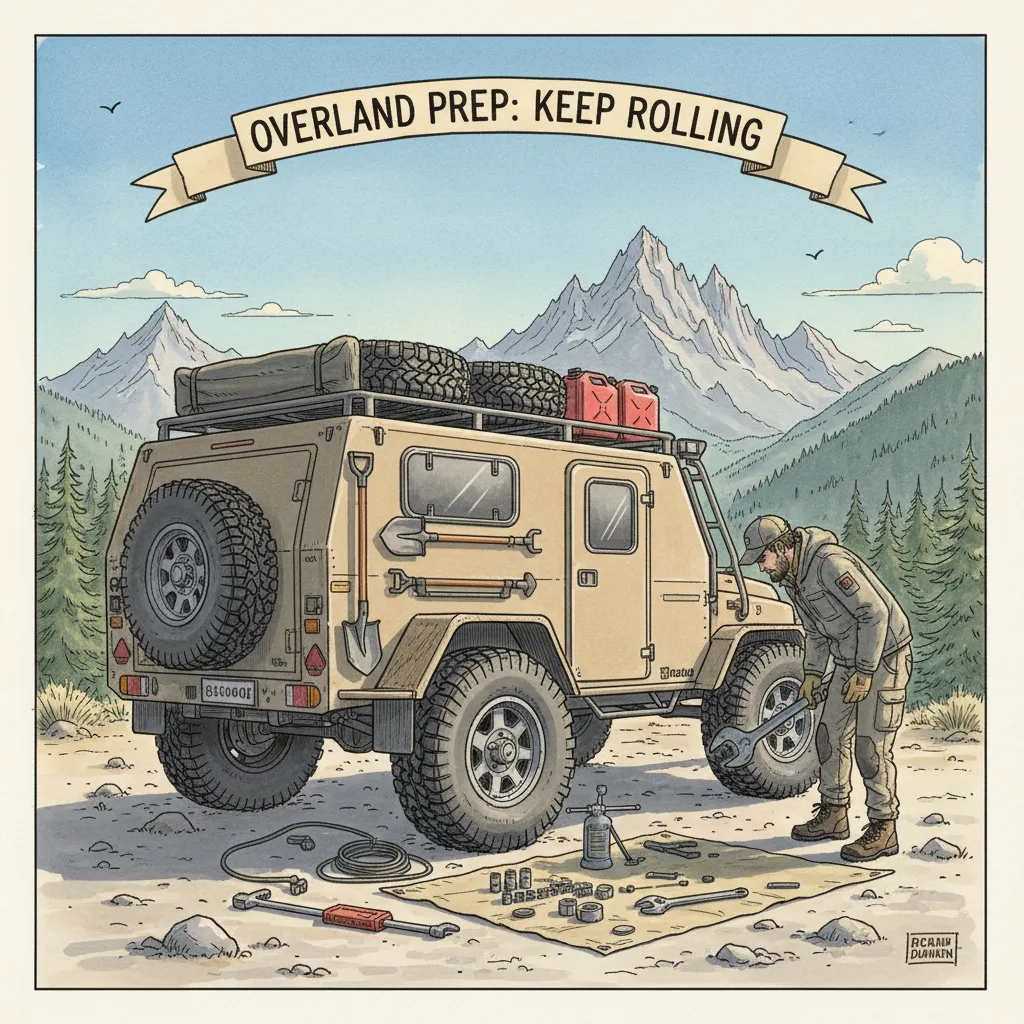
The rugged nature of off-roading puts immense stress on mechanical components. Consistent trailer maintenance for overland travel is non-negotiable for safety.
Pre-Trip Inspection
Before every departure, check the torque on your wheel lugs. Off-road vibrations can loosen bolts surprisingly fast. Inspect the chassis for any hairline cracks in the welds and ensure the articulating hitch is greased and moving smoothly.
Bearing and Seal Care
Dust and water are the enemies of wheel bearings. If your journey involves water crossings, you must check your hub seals. Repacking bearings with high-quality waterproof grease should be a seasonal ritual.
Tire Health
Tires on overland travel trailers should ideally match the bolt pattern and size of your tow vehicle. This allows you to carry one or two spares that work for both the vehicle and the trailer. Maintain proper “airing down” practices; lowering tire pressure on the trailer helps it float over sand and reduces the “washboard” effect on internal cabinetry.
For more technical insights into mechanical durability, Wikipedia offers an extensive history of the evolution of off-road transit.
The Role of SEO and Research in the Overlanding Market
If you are a manufacturer or a blogger in this space, understanding search intent is vital. Using tools like SEMrush or Ahrefs allows you to see what potential buyers are searching for. Are they looking for “lightweight overland travel trailers” or “DIY overland trailer storage solutions”?
By analyzing these trends, content creators can provide more relevant information. Similarly, observing backlink profiles through Backlinko can help enthusiasts find the most authoritative reviews and community forums.
Technical Innovations: The Future of Off-Grid Living
Modern overland travel trailers are becoming increasingly sophisticated, blending aerospace-grade materials with cutting-edge smart technology. One of the most significant shifts is the move toward fully composite, wood-free construction. Traditional trailers often use wood in the framing or flooring, which can rot or harbor mold after years of exposure to moisture and river crossings. High-end overland travel trailers now utilize insulated sandwich panels and galvanized steel frames to ensure the rig remains structural even after hundreds of miles of intense trail vibrations.
Beyond the hardware, integrated smart systems are revolutionizing the overland trailer setup. New control hubs allow you to monitor battery levels, water tank percentages, and internal temperatures via a smartphone app. Some trailers even feature auto-leveling suspension systems, which use internal sensors to adjust independent airbags, ensuring your bed is perfectly flat even when the terrain is rugged. These innovations don’t just add luxury; they reduce the physical toll of setting up camp, allowing you to focus more on the exploration ahead.
Mastering Self-Sufficiency: Water and Waste Management
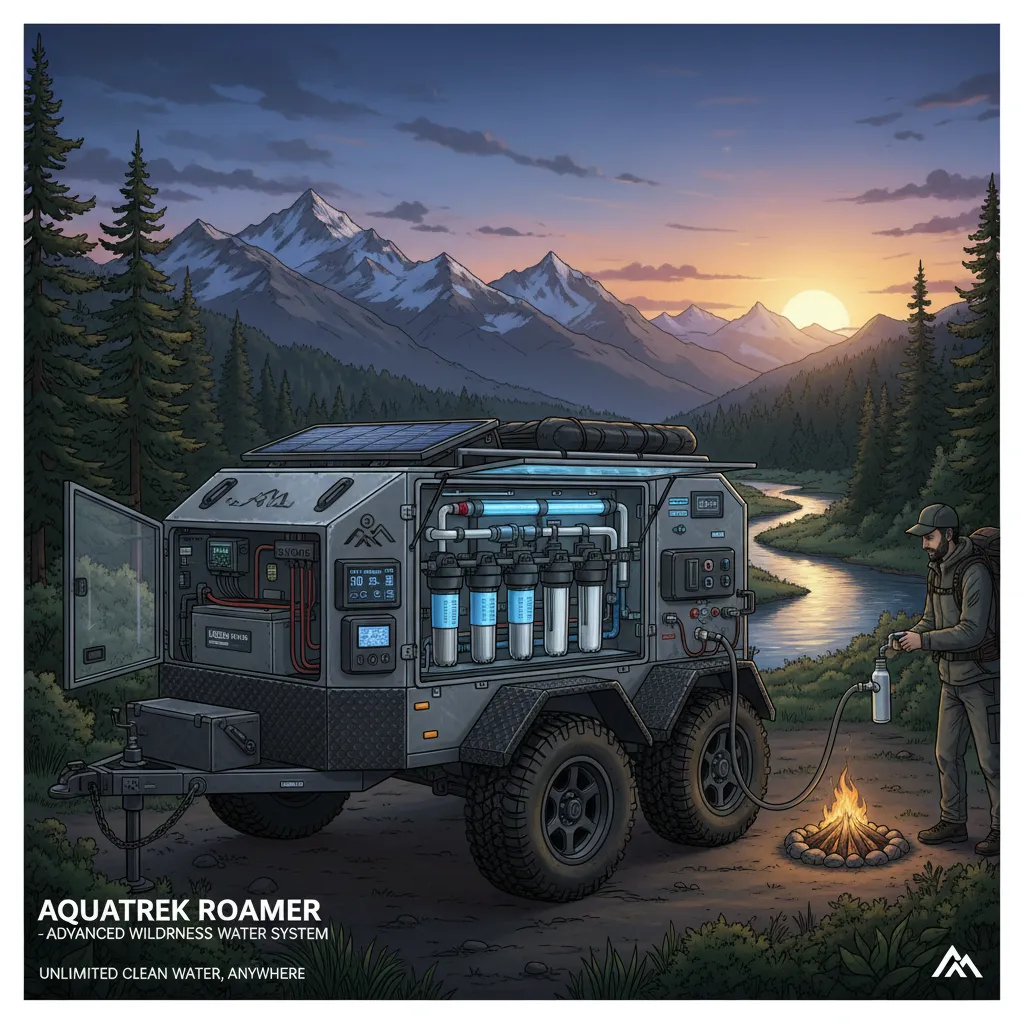
True independence in the backcountry is defined by how long you can stay out without returning to civilization. While power is often the primary focus, water management is the ultimate bottleneck for overland travel trailers. Advanced setups are now moving beyond simple storage tanks to include “closed-loop” filtration systems. These systems allow you to draw water from a local stream and pass it through a multi-stage process involving sediment filters, carbon blocks, and UV sterilization. By having a reliable way to purify water on-site, you can extend your stay in remote locations by weeks.
Equally important is a responsible waste strategy. Standard RV “black water” tanks are rarely practical for overlanding due to the lack of dump stations in the wilderness. Many enthusiasts are transitioning to composting or dry-flush toilets within their overland travel trailers. These solutions eliminate the need for liquid waste storage and simplify trailer maintenance for overland travel, making your camp more environmentally friendly. By mastering these two pillars—water recovery and sustainable waste—you transform your trailer from a mere camper into a true self-contained expedition vessel.
Conclusion
Investing in overland travel trailers opens a world of boundless exploration. By focusing on a robust overland trailer setup, utilizing smart overland trailer storage solutions, and committing to rigorous trailer maintenance for overland travel, you ensure that your adventure companion remains reliable in the harshest conditions. Gear up, head out, and leave the pavement behind.
FAQs About Overland Travel Trailers
What makes a trailer “overland-ready” vs. a standard camper?
An overland trailer features a reinforced off-road chassis, high ground clearance, independent suspension, and an articulating hitch. Standard campers are designed for paved roads and lack the structural integrity to handle the vibrations and torque of off-road trails.
Do I need a special hitch for overland travel trailers?
Yes. A standard ball hitch can bind and break during extreme off-road articulation. You should use a 360-degree articulating coupler, which allows the trailer to rotate independently of the tow vehicle on all axes.
How much do overland travel trailers typically weigh?
They vary widely, from lightweight teardrops weighing around 1,200 lbs to fully equipped expedition trailers reaching 4,500 lbs or more. Always check your vehicle’s Gross Combined Weight Rating (GCWR).
Can I tow an overland trailer with a mid-size SUV?
Many mid-size SUVs can tow lightweight overland travel trailers. However, you must account for the weight of gear and water. Suspension upgrades for the tow vehicle are often recommended to prevent rear-end sag.
How do I manage power while off-grid?
Most setups use a combination of deep-cycle Lithium (LiFePO4) batteries and solar panels. A DC-to-DC charger is also useful, as it allows your vehicle’s alternator to charge the trailer battery while you are driving.
What are the best overland trailer storage solutions for food?
A 12V fridge/freezer is the gold standard. For dry goods, modular aluminum boxes or drawer systems keep items secure and prevent them from being crushed during bumpy rides.
How often should I perform trailer maintenance for overland travel?
You should do a visual inspection before and after every trip. Wheel bearings should be checked or repacked annually, and lug nuts should be torqued every few hundred miles when traveling off-road.
Are overland travel trailers waterproof for deep crossings?
Many high-end trailers are designed with sealed electrical systems and elevated breathers for the axle. However, always check the manufacturer’s maximum fording depth before crossing deep water.
What tires should I run on my trailer?
It is best to run All-Terrain or Mud-Terrain tires that match the size and bolt pattern of your tow vehicle. This ensures parts commonality and simplifies your spare tire strategy.
Is it better to build or buy an overland trailer?
Buying a manufactured trailer ensures a professional warranty and tested engineering. Building your own allows for a custom overland trailer setup tailored to your specific needs, but requires significant mechanical skill and time.