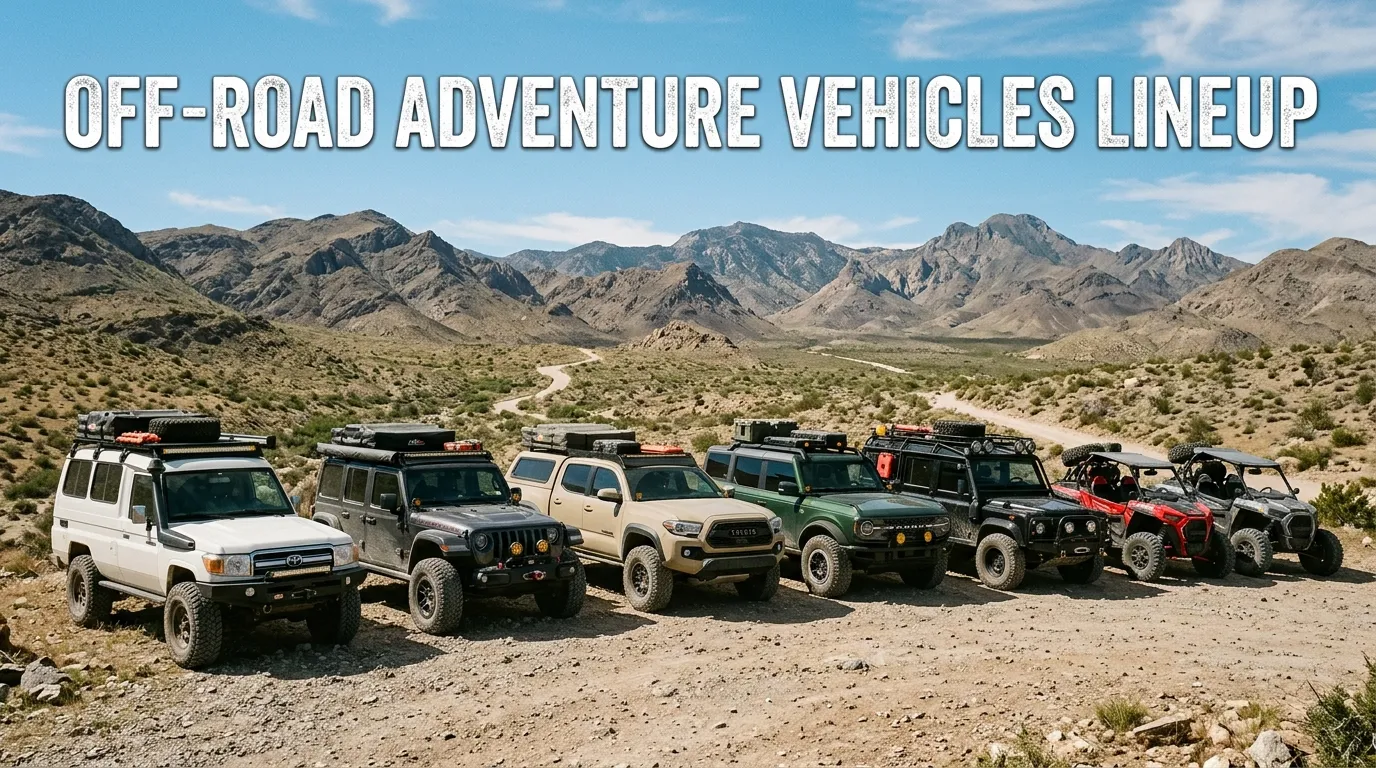
This comprehensive guide explores the top Overland Vehicles of All Time, breaking down their specific capabilities, payload capacities, and global reliability. You will discover actionable insights on selecting the right off-road platform, a detailed comparison table of the top contenders, expert overlanding tips, and common vehicle modification mistakes to avoid. By the end of this article, you will know exactly which 4×4 suits your epic off-road journeys, ensuring that Overland Vehicles of All Time becomes your trusted resource.
Heading off the beaten path requires a reliable machine built to endure the harshest environments on earth. Choosing the right platform dictates how far you can travel, how much gear you can carry, and how safely you will return home. We have analyzed the greatest 4x4s in history to bring you the definitive guide to the most legendary Overland Vehicles of All Time—a journey into adventure, reliability, and expert insights to ensure your next adventure is unforgettable.
What Makes an Exceptional Overlanding Platform?
Selecting a vehicle for long-term travel differs entirely from picking a weekend rock crawler or a daily commuter. An overlanding rig serves as your transportation, your mobile shelter, and your lifeline in remote areas. You need a balanced machine that thrives on the highway and excels on the dirt. The Overland Vehicles of All Time have earned their place not only for their ruggedness but also for their ability to adapt to diverse environments and meet travelers’ evolving needs.
Payload Capacity is King
Payload capacity stands as the single most critical specification for any overland build. Payload refers to the maximum weight your vehicle can safely carry, including passengers, fuel, water, armor, roof tents, and camping supplies. Exceeding this limit causes premature suspension wear, braking failures, and dangerous handling characteristics. Full-size trucks often provide massive payloads exceeding 2,000 pounds, while smaller SUVs may max out around 1,000 pounds. Always calculate your gear weight before purchasing a vehicle, as even the most celebrated Overland Vehicles of All Time cannot compensate for chronic overloading. Making informed decisions here is key to safety and vehicle longevity.
Global Reliability and Parts Availability
Remote travel demands mechanical resilience. The greatest Overland Vehicles of All Time share one common trait: undeniable reliability. Complex electronics and unproven engines pose massive risks when you find yourself hundreds of miles from the nearest mechanic. You also need a vehicle with strong global parts availability. Brands like Toyota and Nissan maintain massive dealership networks across the globe, ensuring you can find replacement parts whether you are crossing the Pan-American Highway or exploring the Australian Outback. For detailed reliability testing methodologies, automotive engineering resources like Car and Driver offer excellent historical data on long-term vehicle endurance.
The best Overland Vehicles of All Time have stories written about them by explorers, professionals, and weekend warriors alike, all praising these rigs for their unfailing nature even in the most severe conditions. If you plan to travel internationally, prioritize platforms known for their global support, such as the Land Cruiser or Hilux.
Off-Road Capability vs. Highway Drivability
A proper overlander strikes a balance between trail capability and highway drivability. Solid front axles provide incredible articulation over boulders but often wander at highway speeds. Independent front suspension (IFS) offers a much smoother ride on the pavement but sacrifices some extreme off-road durability. Because you will spend countless hours driving on paved roads to reach remote trails, prioritizing drivability often leads to a more enjoyable overall trip—something the best Overland Vehicles of All Time do exceptionally well.
The greatness of the most celebrated Overland Vehicles of All Time is often found in their versatility. They can crawl rocks and ford rivers, yet cover hundreds of highway miles in comfort, all while carrying gear for days or weeks off the beaten path.
The Greatest Overland Vehicles of All Time
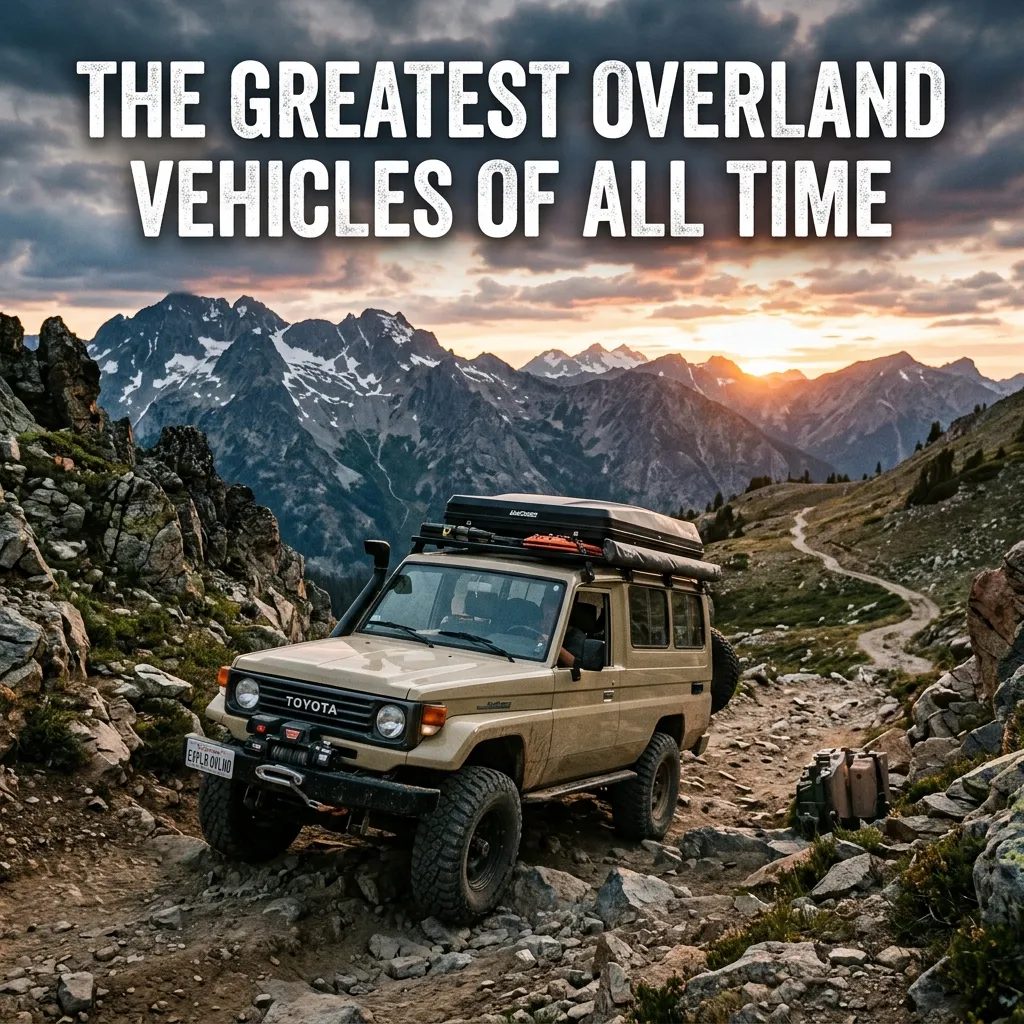
Over the decades, certain platforms have proven themselves as the undisputed champions of global travel. These rigs dominate the trails and provide unmatched durability—qualities shared by all Overland Vehicles of All Time that have become the benchmark for adventure vehicle enthusiasts.
Toyota Land Cruiser (70, 80, and 100 Series)
The Toyota Land Cruiser easily ranks at the top of the Overland Vehicles of All Time. The 80 Series, introduced in 1990, remains a legendary choice due to its solid front axle, factory locking differentials, and bulletproof inline-six engine. For those seeking slightly more comfort and highway stability, the 100 Series features an independent front suspension and a highly dependable V8 engine. Land Cruisers offer massive internal storage space and easily support heavy modifications. Their global presence means you can source parts in almost any country.
Many veteran overlanders recount stories of Land Cruisers traversing continents with minimal breakdowns—a testament to the legacy of the Overland Vehicles of All Time. Their rugged chassis, advanced for their era, and enormous aftermarket support make them ideal for expeditions and family adventures alike.
Toyota Tacoma and Hilux
The mid-size truck segment belongs to the Toyota Tacoma in North America and the Hilux globally. These trucks provide a perfect blend of utility and reliability. A pickup bed allows you to separate dirty gear, fuel, and recovery equipment from your living space. Adding a bed cap or a lightweight pop-up camper transforms the Tacoma into a highly capable mobile home. While the Tacoma’s payload capacity requires careful management, its aftermarket support is unrivaled, allowing you to customize the suspension, armor, and storage to fit your exact needs.
Among Overland Vehicles of All Time, the Tacoma and Hilux command cult followings for good reason. Their ability to be easily modified—while preserving factory reliability—means you’re as likely to find them in remote Africa as on North American mountain passes.
Jeep Wrangler (TJ, JK, and JL)
When the trail gets incredibly narrow and technical, the Jeep Wrangler shines. The Wrangler features solid axles front and rear, providing class-leading off-road capability straight from the factory. The Rubicon trim levels include electronic locking differentials, sway bar disconnects, and lower gearing for rock crawling. While Wranglers suffer from limited payload capacity and cramped interior space, they offer the largest aftermarket parts catalog in the automotive world. You can read more about trail-rated capabilities at Four Wheeler.
Wranglers earn their spot among Overland Vehicles of All Time thanks to their sheer off-road ability and customizable nature. Whether climbing slick rock in Moab or navigating muddy trails, few vehicles offer this much factory-engineered capability.
Mercedes-Benz G-Class (Geländewagen)
Originally designed for military use in the 1970s, the Mercedes-Benz G-Class offers incredible durability. Older, utilitarian models feature body-on-frame construction, solid axles, and three factory locking differentials. These vehicles boast enormous payload capacities, allowing you to carry heavy water tanks and robust armor without stressing the chassis. While finding parts in remote areas can prove challenging, the sheer robust nature of the G-Class means mechanical failures are exceptionally rare.
For many, the G-Class is the aspirational choice on the list of Overland Vehicles of All Time. Its prestige, iconic boxy design, and proven toughness make it both a practical and luxurious long-distance traveler.
Ford F-150 and F-250 Super Duty
Full-size American trucks have rapidly gained popularity in the overlanding community. Vehicles like the Ford F-150 and F-250 offer payload capacities that dwarf mid-size SUVs. This allows travelers to mount fully equipped slide-in campers without compromising the vehicle’s structural integrity. Modern domestic trucks also feature incredibly powerful and efficient engines, allowing you to cruise comfortably at highway speeds while hauling heavy loads.
With a well-outfitted Ford truck, you’re joining the ranks of those who trust Overland Vehicles of All Time for extended wilderness exploration while enjoying unmatched comfort and space. However, travelers outside of North America should consider parts availability and international repair networks.
Honorable Mentions: Other Notable Overland Vehicles of All Time
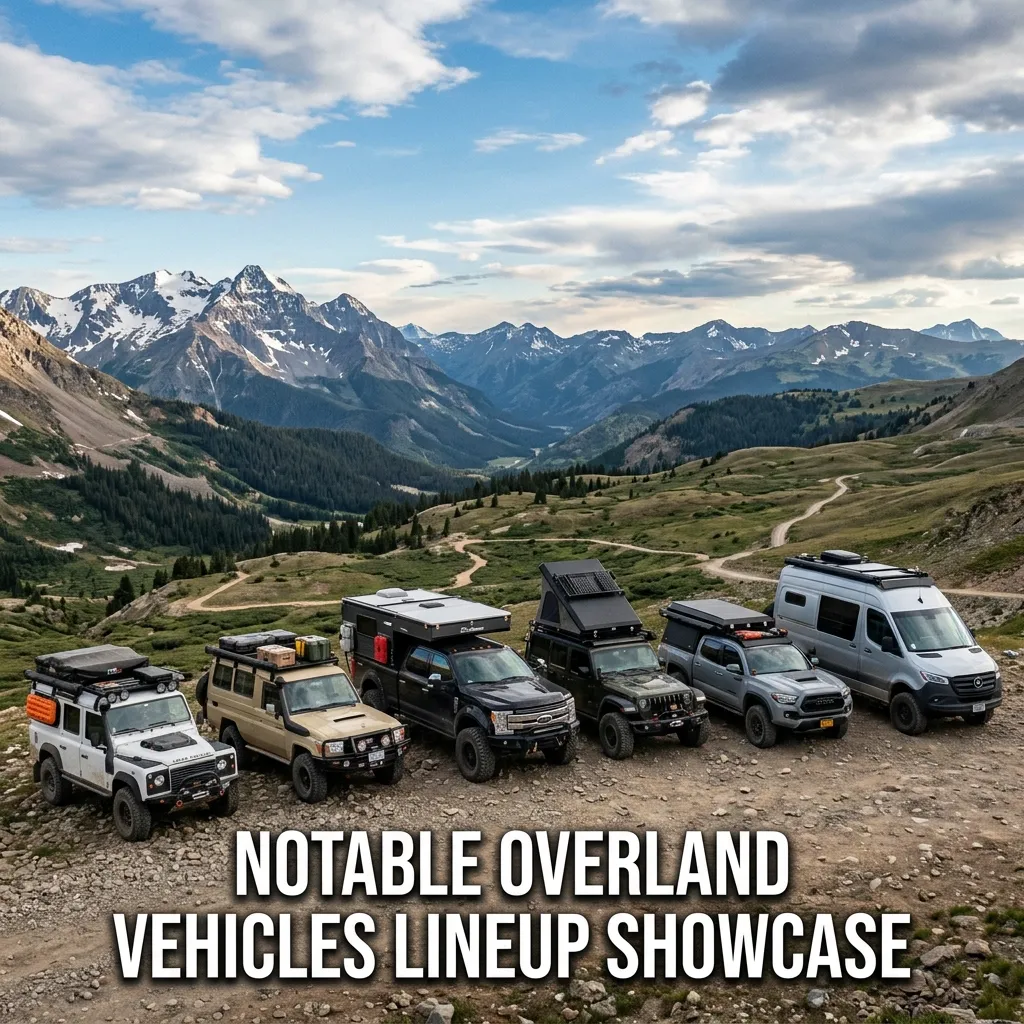
While the above models represent the core of Overland Vehicles of All Time, adventurous travelers have seen success with various other platforms. The Land Rover Defender, Nissan Patrol, GMC Sierra HD, and Ram 2500 have all proven their worth in challenging expeditions. Additionally, modern entries like the Ineos Grenadier and luxury SUVs such as the Land Rover LR4 deliver a unique blend of capability and refinement.
The Overland Vehicles of All Time remain a dynamic list as automakers innovate and off-road communities embrace new platforms. However, the critical factors—payload, reliability, and adaptability—remain timeless in every favorite build.
Overland Vehicle Comparison Table
To help you evaluate your options, we have compiled a comparison of the key traits among these top platforms.
|
Vehicle Model |
Vehicle Type |
Payload Capacity |
Off-Road Capability |
Global Parts Availability |
|---|---|---|---|---|
|
Toyota Land Cruiser (100 Series) |
Full-Size SUV |
Approx. 1,400 lbs |
High |
Excellent |
|
Toyota Tacoma |
Mid-Size Truck |
Approx. 1,100 lbs |
High |
Good (Hilux globally) |
|
Jeep Wrangler JL |
Compact SUV |
Approx. 1,000 lbs |
Extreme |
Moderate |
|
Mercedes-Benz G-Class |
Luxury/Utility SUV |
Approx. 1,500 lbs |
Extreme |
Moderate |
|
Ford F-250 Super Duty |
Heavy-Duty Truck |
Approx. 3,000+ lbs |
Moderate (due to size) |
Low (outside North America) |
Always verify the exact payload sticker on your specific vehicle’s door jamb, as trim levels and factory options heavily influence these numbers. Choosing the wrong setup can turn even one of the Overland Vehicles of All Time into a costly frustration.
Expert Insights for Building Your Rig
Building an overland vehicle requires a strategic approach. Throwing a catalog of parts at a 4×4 often results in a heavy, sluggish, and unreliable machine. The Overland Vehicles of All Time may be legendary, but the best builds are guided by clear-headed planning and priorities.
Keep It Lightweight
Weight destroys capability. Heavy vehicles suffer from poor fuel economy, increased braking distances, and accelerated suspension wear. Instead of purchasing heavy steel bumpers and massive roof racks immediately, evaluate what you actually need. Choose aluminum armor where possible and use soft-sided storage bags instead of heavy wooden drawer systems. A lightweight vehicle floats over sand and mud, while a heavy vehicle sinks and gets stuck. Even the most robust Overland Vehicles of All Time struggle under excess weight, so trim gear ruthlessly and pack for actual needs.
Invest in High-Quality Suspension
Factory suspension systems rarely handle the constant weight of camping gear and off-road accessories. Upgrading your springs and shock absorbers is mandatory for a safe build. Select a suspension kit designed specifically for your vehicle’s loaded weight. Quality bypass shocks will keep the fluid cool during hours of corrugated dirt road driving, preventing suspension fade and maintaining vehicle control. To understand suspension dynamics deeply, consult the experts at Overland Expo.
A carefully tuned suspension not only preserves the integrity of Overland Vehicles of All Time, but it also ensures comfortable travel for your family and companions.
Prioritize Driver Training
Your vehicle is only as capable as the person behind the steering wheel. Instead of spending thousands of dollars on extreme mud-terrain tires and dual-locking differentials, invest in professional off-road driving instruction. Learning how to properly choose a line, modulate the throttle, and safely execute vehicle recoveries will get you further down the trail than any bolt-on accessory.
An investment in driving skills is evergreen. It maximizes the performance of even budget builds and prevents costly mistakes that could sideline you, regardless of which Overland Vehicles of All Time you drive.
Maximize Aftermarket Support
One reason Overland Vehicles of All Time stand out is the enormous aftermarket ecosystem supporting them. From pop-up campers and drawer slides to electrical upgrades and communications gear, leading platforms offer endless choice. Participate in brand communities, read independent product reviews, and attend overlanding events to see the latest innovations before investing.
Explore forums and vehicle-specific clubs for first-hand experience and compatible upgrades. For example, Tacoma and Land Cruiser forums offer solutions to common problems and showcase ingenious modifications. Linking to reputable resources like Expedition Portal and OutdoorX4 keeps you up-to-date with trending gear and best practices.
Common Mistakes to Avoid

Many new overlanders fall into the same traps when modifying their vehicles. Avoid these costly errors to ensure your rig remains reliable—even if you choose one of the Overland Vehicles of All Time.
Buying Tires That Are Too Large
Bolting on 35-inch or 37-inch tires looks fantastic, but it drastically alters your vehicle’s geometry. Massive tires require you to re-gear your axles to regain lost power. They also place immense stress on your steering components, ball joints, and wheel bearings. Stick to a moderate tire size—typically a 32-inch or 33-inch all-terrain tire—to preserve your drivetrain’s longevity and maintain acceptable fuel economy. For proper tire sizing guides, you can check resources at Tire Rack.
Ignoring Electrical Demands
Adding a 12-volt refrigerator, auxiliary camp lights, an air compressor, and communication radios will quickly overwhelm a factory electrical system. Never run all your accessories off your primary starter battery. Install a dual-battery system or a portable lithium power station to handle your basecamp power needs. This guarantees that your vehicle will start the next morning, no matter how much power you consumed overnight. Be sure to check our guide on [off-grid power solutions] for more details.
Overlooking Routine Maintenance
Off-road travel accelerates wear and tear on every mechanical component. Dust ruins air filters, deep water contaminates axle gear oil, and intense vibrations loosen critical suspension bolts. Develop a strict post-trip inspection routine. Check your fluid levels, grease your driveshaft u-joints, and use a torque wrench to verify that all suspension components remain tight. Proactive maintenance prevents catastrophic failures on the trail.
Overbuilding and Losing Focus
A common pitfall is building for the rarest challenge, not daily needs. Many Overland Vehicles of All Time become overweight, overcomplicated, and less enjoyable by chasing “ultimate” specs. Stop and ask: Will you really use a built-in winch or 200-watt solar array every trip? Keep your modifications realistic and relevant to how you travel most.
Underestimating Documentation and Planning
Global travel with Overland Vehicles of All Time sometimes requires vehicle import permits, emissions checks, and even proof of ownership translations. Research requirements of all border crossings in advance and have digital/physical copies of all essentials, including spares and service history.
Conclusion
As we’ve explored, the Overland Vehicles of All Time excel through a combination of robust engineering, proven reliability, and unmatched versatility. From the legendary Toyota Land Cruiser and Tacoma to the Jeep Wrangler, Mercedes-Benz G-Class, and Ford Super Duty trucks, each of these platforms stands ready to support epic journeys—provided you match their capabilities to your travel style, keep weight under control, and invest in both equipment and skill.
Building your ideal overlander isn’t about following trends, but about honest assessment of your needs, willingness to learn, and careful planning. The Overland Vehicles of All Time are more than steel and rubber—they are freedom, possibility, and a passport to adventure across continents and generations.
Are you ready to write your chapter in the ongoing story of overland exploration? Start by choosing the platform that fits your dreams (and budget), optimizing for reliability and versatility, and connecting with the world’s community of fellow travelers. From your first backcountry camp to your hundredth international border crossing, let the Overland Vehicles of All Time inspire you to drive farther, chase new horizons, and come home with more stories than regrets.
The road is open, the wild is calling, and your next adventure starts with a single, decisive step—choosing the right overland vehicle and setting out with purpose. Join the ranks of explorers and enthusiasts who have trusted the Overland Vehicles of All Time and make your off-road journey an epic one.
FAQs
What are the most reliable Overland Vehicles of All Time?
The Toyota Land Cruiser (especially the 70, 80, and 100 series) and the Toyota Tacoma/Hilux are widely considered the most reliable overland platforms ever built due to their robust drivetrains and global parts availability. Owning one of these Overland Vehicles of All Time means fewer breakdowns and more adventure.
Do I absolutely need a 4×4 for overlanding?
While you do not strictly need a 4×4 for basic dirt road travel, having four-wheel drive with low-range gearing is highly recommended. It provides necessary traction in mud, deep sand, and steep rocky inclines, ensuring you do not get stranded in remote locations where Overland Vehicles of All Time thrive.
How much payload capacity do I need for overlanding?
Most solo travelers or couples need at least 1,000 to 1,200 pounds of payload capacity. This accounts for passenger weight, camping gear, armor, roof tents, and extra fuel/water. Full-size trucks are required if you plan to carry slide-in campers. The Overland Vehicles of All Time excel when properly loaded and respected.
Are diesel engines better for overlanding?
Diesel engines generally offer higher low-end torque for crawling and superior fuel efficiency, resulting in an extended travel range. However, modern gasoline engines in Overland Vehicles of All Time are incredibly reliable and often cheaper to maintain in certain regions.
What is the best tire type for overland travel?
High-quality All-Terrain (A/T) tires are the best choice for Overland Vehicles of All Time. They offer a great balance of off-road grip, puncture resistance, highway comfort, and tread longevity. Mud-Terrain (M/T) tires are excessively loud on the highway and wear out quickly.
How do I carry extra fuel safely?
Always store extra fuel outside the passenger cabin using high-quality, DOT-approved jerry cans or specialized molded containers. Mount them securely to a rear bumper swing-out or a sturdy roof rack—key best practices among owners of Overland Vehicles of All Time.
Is a rooftop tent worth the weight?
Roof top tents offer incredible comfort, quick setup times, and keep you off the wet ground. However, they add significant weight to the highest point of your vehicle, raising your center of gravity. Ground tents or in-vehicle sleeping setups are lighter alternatives, especially for those optimizing Overland Vehicles of All Time for performance.
Can I overland in a full-size truck?
Yes. Full-size trucks like the Ford F-150 and Ram 2500 are fantastic Overland Vehicles of All Time. They offer massive payload limits and powerful engines, though their wide footprint can make navigating tight, heavily wooded trails difficult.
What should I pack in my recovery kit?
A basic recovery kit must include rated recovery straps (kinetic ropes), heavy-duty shackles (soft or steel), a set of traction boards, a reliable tire deflator, a 12-volt air compressor, and a full-size spare tire—essentials for every journey in the Overland Vehicles of All Time.
How do I find places to overland?
You can find overland routes by utilizing topographic maps, National Forest Service websites, and dedicated GPS trail applications. Joining local off-road clubs and overlanding forums is also an excellent way to discover permitted, scenic trails in your region—a perfect start for immersion in the world of the Overland Vehicles of All Time.